
Introduction The Role of Technology in Modern Learning
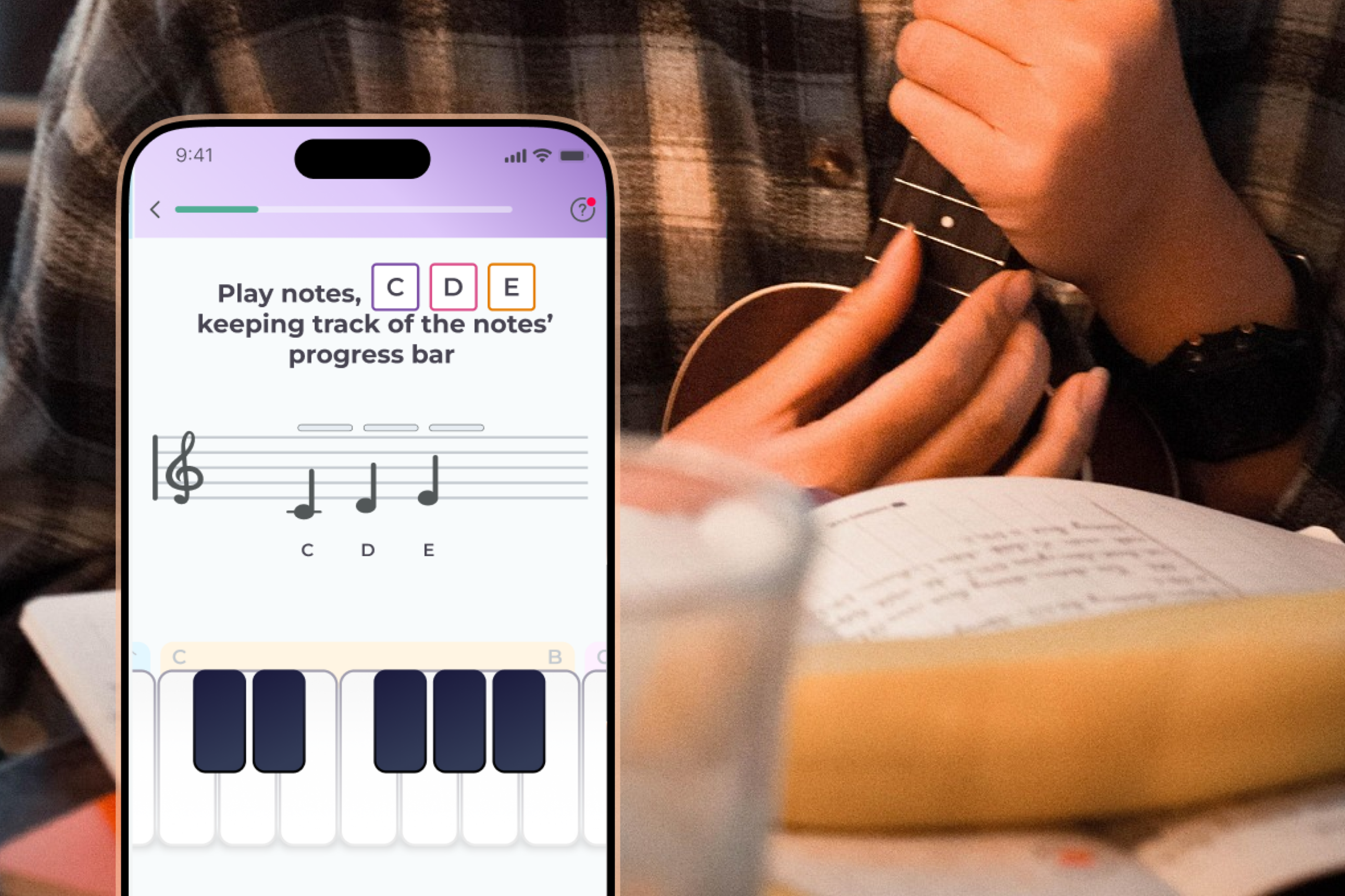
The era of digital transformations changes the face of traditional teaching. Nowadays, technologies are not just complementary to the learning process; they become an integral part of it, expanding the limits of what is possible and allowing the educational experience to be tailored according to the needs of every student. AI algorithms; audio analysis; Talented app; feedback engine; personalization help form a coherent system architecture with an audio pipeline and real-time engine that supports lesson tweaks and performance metrics. For musicians, even a modern piano training app can deliver model personalization and algorithmic feedback at scale.
Especially striking is this in musical education, where precision and the subtle perception of sound carry decisive importance. Modern tools can allow students to master from anywhere in the world those skills that could be learned before only when in close personal contact with the teacher. The main factors that can be highlighted among the key factors of successful technology-assisted learning are:
- Realtime interactivity and feedback
- An individual approach to pace and style of perception
- The possibility to monitor progress continuously
- Techniques and materials available nowhere else
It is all these elements put into the musical learning app and integrated by us; not just knowledge but an educational experience where the student becomes the co-author of his or her development.
Artificial Intelligence as a Tutor’s Assistant in the App
AI is not a replacement for the tutor but a strong tool that extends and amplifies the functionality and capabilities of the teacher. AI acts as a virtual assistant in our application, which:
- Analyzes the mastery level of a musical instrument or vocal data.
- Provides immediate feedback on performance.
- Helps in identifying the weak spots and automatically suggests exercises for their correction.
- Optimizes the lesson plan in accordance with the user’s progress.
Table 1. AI Roles in the Application
| Function | Description | Benefit for the Student |
| Performance Evaluation | Recognition of notes, tempo, intonation | Accurate and quick error understanding |
| Personalization of the Task | Selection of exercises based on performance analysis | Effective development of a skill |
| Progress Monitoring | Tracking changes dynamics over time | Motivation due to visible results |
| Technique Recommendations | Tips for improving playing or vocal technique | Improvement of performance quality |
We are creating an ecosystem in which AI does not just record data but becomes an active partner in learning, helping to unlock the potential of each user — thus we do. This component overview spans neural networks, data processing, and a tech stack tuned for AI algorithms and a responsive feedback engine inside the Talented app.
Audio Analysis How the Application Recognizes and Evaluates User Speech
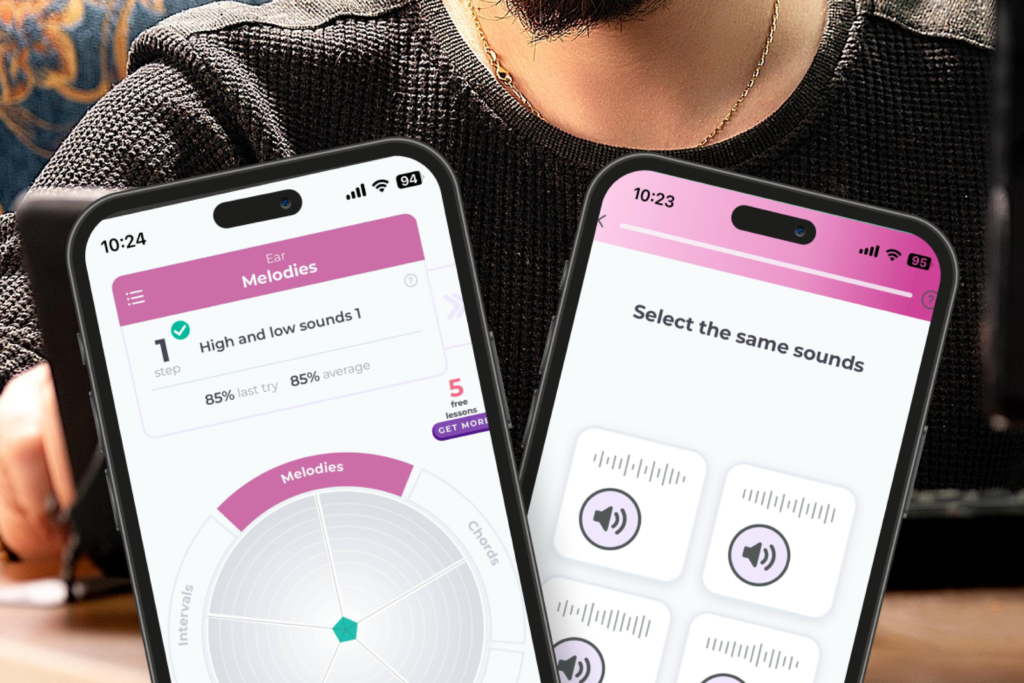
Modern speech recognition technologies, as implemented in the Talented app, represent complex systems — not only to hear, but to understand the subtlety of pronunciation, intonation, and tempo by the user. This process can be divided into several main stages:
- Sound Signal Capture — The microphone of the device records the student’s voice, turning it into a digital format suitable for further processing.
- Processing and Filtering — The system removes background noises from the audio track, enhancing the quality of the analysis.
- Speech Recognition — Uses a deep learning model, which transcribes the audio into text and outlines important features of pronunciation.
- Articulation and Intonation Evaluation — Algorithms compare the received speech, detecting deviations of phonetic parameters by referring to samples.
- Feedback Formation — A detailed report with suggestions on pronunciation, accent improvement, and speech rhythm is shown in the app.
Thus, audio analysis serves for a person not only to hear themselves from the outside but also to set goals and discuss one’s wishes, as well as get concrete advice on how to surpass one’s own communication skills in a foreign language or improve diction. Here, audio analysis runs through an analysis workflow and real-time engine that powers personalization across lesson tweaks.
Benefits of Applying AI and Audio Analysis for Motivation and Progress
Interaction with technology in learning is not a matter of convenience but a key to deep personal development. Such special conditions, created in the Talented app thanks to AI and audio analysis, when the student does not just complete tasks but feels constant support and stimulus for growth, will be considered the main advantages of such an approach.
- Real-time Accurate Feedback
It instantly identifies errors in pronunciation, intonation, and accents for immediate correction with no delay. Difficult moments are underlined automatically, thus helping to focus precisely on those aspects of speech that need improvement. - Data Analysis for Individualized Approach
AI then analyzes the user’s results and provides options for exercises to do, accounting for strengths and weaknesses. An individual learning plan contributes to sustained motivation: it is clear, concrete progress is available, the user knows that he or she is not acting in vain. - Interactivity and Variety in Formats
Audio analytics allow game mechanics to be used in such activities as quizzes, dialogues, and the memorization of texts with audio, making learning vivid and interesting. Repetitions, taking into consideration the analysis of past mistakes, decrease fatigue and train concentration; thus, increasing the efficiency of the session. - Emotional Support at Every Step
Intelligent hints and encouraging remarks built into the app create a sense of trust and support. This is especially important for those students who fear public speaking or are unsure because of some language barrier issues. - Following Development Dynamics
It is possible to visually evaluate progress through regular reports with charts and statistics, which strengthens internal motivation. One can perceive their own successes and visible results; this develops the practice of systematic learning.
Thus, not only the artificial intelligence and audio analysis technologies inside Talented app create a convenient tool for tutors, but also form in a user a sense of constant accompaniment and growth. It transforms the process of learning from routine into a dynamic and inspiring journey where motivation goes hand-in-hand with efficiency, guided by AI algorithms and a robust feedback engine.
Practical Cases Examples of Successful Interaction with the Application
Convinced repeatedly during work with our application, powerful educational effects technologies gathered together are able to create. Allow me to bring a few bright examples which confirm how AI combined with audio analysis really changes the approach to learning.
1. Maria’s Story – Struggle with Pronunciation
The student of the philology faculty, Maria, had long experienced difficulties with the correct articulation of English sounds. Our application revealed key problems in intonation and accents by using voice analysis. Thanks to the individual tasks and regular feedback provided by embedded AI, in one month Maria noticed a big difference: her speech was clearer and she was more confident. The following is a case whereby artificial intelligence supported the identification of weaknesses and provided pinpoint recommendations through audio analysis.
2. Alexey and Adaptation of Educational Content
For Alexey, flexibility was the key: learning had to adapt to his schedule and knowledge level. The smart system monitors results in real time and automatically switches the difficulty of assignments if overloading is detected. This kind of dynamic approach really accelerated the process of remembering information and made classes more effective.
3. Group of Schoolchildren and Collective Pronunciation Development
Not only individual but also group use of technologies proved to be effective in practice. United by a common task, the children were given the opportunity for comparing their performance and learning from one another by receiving detailed audio feedback. Motivation in the group increased, competition became healthy, and noticeable results appeared just after a few lessons.
What do all these stories have in common?
- Flexibility for the application to adapt to different goals and levels.
- Precision in audio analysis, enabling deep speech examination.
- Reactive support of AI algorithms is always “at hand,” helping to maintain motivation and correct mistakes.
The practical examples confirm that when technology complements either the teacher’s work or self-study, a really tangible result is achieved. The future of educational applications — we believe — exactly in such synergy, not just as a toolset, but as a reliable partner in reaching goals within a thoughtful software design and tech stack.
Perspectives of the Development of Technologies in Online Tutoring
Technologies that are changing the educational landscape every day open absolutely new horizons for student-teacher interaction. The future, especially in online tutoring, looks particularly promising for:
- Growth in the accuracy of artificial intelligence — the smarter models are, the more they can analyze mistakes on an individual basis and make recommendations. For creative and methodological aspects, it will enable teachers to focus, entrusting routine tasks to AI.
- Multimodal data integration — assessing not only speech and text but also gestures, facial expressions, and emotional states in student improvement will bring about a deeper understanding of individual needs.
- Development of adaptive platforms — applications will become even more flexible and intuitive; they will instantly adapt to the style and pace of learning of a certain user to make the educational process as comfortable as possible.
- The use of augmented and virtual reality technologies — immersion into an interactive environment will make learning not only effective but exciting, too, whereby practical skills can be realized in a controlled environment.
To sum up, technologies will not replace humans, but they will become a catalyst for the new quality of education. Expect continued personalization driven by machine learning and a real-time engine that refines lesson tweaks via algorithmic feedback and performance metrics.
Conclusion Human and Technological Symbiosis within the Educational Process
The human factor in teaching, even in the era of artificial intelligence and intelligent audio analysis, is irreplaceable. Yet, for the maximum effect to be achieved, harmony, synergy, and interaction of two components are needed:
- Teacher’s intuition, experience, and adaptability — only a human can understand the subtle nuances of motivation, mood, and extra-curricular interests of the student.
- AI and algorithms advantages — immediate analysis of big data sets, tracking errors, automated task and material selection based on the level.
- Collaborative work — a strong tool the teacher gets to save time from routine operations, but for the student, there is quality feedback and regular motivation.
Thus, Talented shows the future of educational technologies where AI is not a competitor but serves as an assistant for the tutor in extending the limits of traditional learning. It is in this collaboration that true potential discloses itself in a result: successful, profound, and conscious education — powered by Talented app, AI algorithms, a responsive feedback engine, and deep personalization across the entire analysis workflow and component overview.